Protecting a business involves more than locking the doors at closing time. Business owners also need to manage who can enter the building, which areas employees can access, and what happens when staffing or security needs change. Access control system installation provides a more flexible way to manage entry than relying solely on traditional keys. While these systems are especially valuable in commercial settings, many homeowners also find them beneficial when they want greater control over who enters their property.
What Is an Access Control System?
An access control system is an electronic security solution that determines who is authorized to enter a building or designated area. Rather than relying exclusively on physical keys, employees and other approved users can gain entry with credentials such as key cards, fobs, PIN codes, compatible mobile devices, or biometric information.
For businesses, this creates opportunities to manage access based on an employee’s responsibilities. A company might allow all staff through the main employee entrance while limiting access to inventory rooms, offices, storage areas, and other restricted spaces.
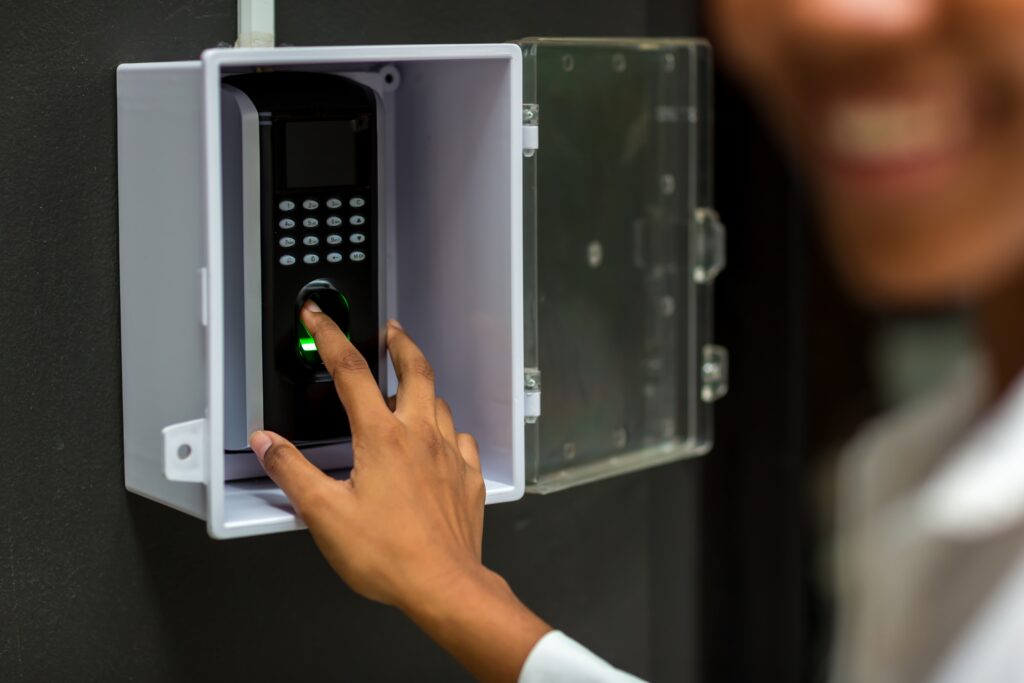
Although specific equipment varies, access control typically involves a credential reader or keypad, electronic locking hardware, a controller, and for commercial and networked systems, management software. These components work together to verify credentials and determine whether the user should be granted entry.
Professional access control system installation helps ensure these components work properly with the doors and locking hardware already protecting your business.
Different Types of Access Control Systems
Businesses have different security requirements depending on their size, industry, number of employees, and property layout. Understanding the available options can help you identify which type of system may work best for your operation.
Key Cards and Key Fobs
Cards and fobs are common choices for commercial properties because credentials can typically be assigned to individual employees. If someone leaves the company or loses a credential, it can be deactivated without requiring the business to replace locks or redistribute cards or fobs to the rest of the staff.
Keypads and PIN Codes
Keypads allow authorized users to enter a designated code at the door. Because there is no physical credential to carry, they can provide a convenient option for certain entrances and restricted areas. Codes can also be updated when security requirements change.
Mobile Credentials
Compatible access control systems can allow employees to use their smartphones as credentials. For businesses interested in reducing their reliance on physical cards and fobs, mobile access can provide another convenient way to manage entry.
Biometric Access
Biometric systems use identifying characteristics, such as fingerprints, to verify users. Businesses may consider this type of access for areas where tighter restrictions are appropriate, although biometric technology is not necessary for every commercial application.
Standalone and Networked Systems
A standalone system may be appropriate when a business only needs to control one door or a small number of entry points. Networked systems let you manage multiple doors or areas from a centralized system, which can be useful for larger commercial properties.
Benefits of Access Control System Installation
The ability to control entry electronically can make security easier to manage as employees, responsibilities, and business operations change. Access control system installation offers several practical benefits for commercial properties.
Some of the most significant advantages include:
- Better control over employee access: Businesses can determine which employees are authorized to enter specific areas rather than giving everyone the same level of access.
- Simplified credential management: If a card or fob is lost, stolen, or not returned by a former employee, the individual credential can typically be deactivated without rekeying multiple doors.
- Customized access schedules: Compatible systems can restrict entry based on days or hours, allowing businesses to establish access according to employee schedules or responsibilities.
- Entry activity records: Depending on the system, businesses may be able to review credential activity, providing additional information about who entered and when.
- Less reliance on physical keys: Businesses with many employees can reduce the challenges of distributing, collecting, replacing, and tracking traditional keys.
- Greater flexibility as your business grows: Certain systems can accommodate additional users and doors, helping businesses adapt their security as their facilities or workforce expand.
Can Homeowners Benefit From Access Control?
Although access control is frequently associated with commercial properties, the technology can also be useful at home. Homeowners may appreciate being able to provide convenient entry to family members or other authorized individuals without distributing multiple traditional keys.
The appropriate system depends on the property and how the homeowner wants to manage entry. A professional locksmith can help determine whether access control provides meaningful benefits for a particular home.
When Should a Business Upgrade Its Access Control?
You shouldn’t wait for a security problem to reconsider how access to your property is managed. Changes within your business can make an existing key or access system less practical over time.
You may want to consider access control system installation when:
- Managing and tracking employee keys has become difficult.
- Employees frequently join, leave, or change roles.
- Certain offices, inventory rooms, or other areas need restricted access.
- Existing access equipment has become outdated or unreliable.
- Your business has added employees, doors, departments, or facilities.
- You want greater flexibility over when individual users can enter.
Before upgrading, consider how employees and other authorized individuals use your building each day. Identifying which doors require controlled access and who needs to use them can help ensure the system fits your actual operations.
Ready to Upgrade Your Business Security?
An access control system is only as effective as the doors, locks, hardware, and components supporting it. Working with an experienced professional helps ensure the entire entry point is considered when designing and installing your system.
Mr. Keys has decades of experience serving businesses throughout Ocean County, NJ, and the surrounding areas. Our team understands both commercial doors and locking hardware, allowing us to evaluate your existing setup and recommend an access control system installation suited to the way your business operates.
Whether you need to control a single employee entrance or manage access across multiple areas of your property, we can help you determine the right approach. Mr. Keys also provides commercial door installation and repair, locksmith services, high-security locks, and safe sales and service. We also work with homeowners looking for professional solutions to improve security and manage access to their properties.
Ready to take greater control of who enters your business? Contact Mr. Keys today to discuss your security needs and schedule professional access control system installation.
Access Control System Installation FAQs
What is a commercial access control system?
It is an electronic system that allows a business to control which employees or other authorized users can enter specific doors or areas.
What credentials can employees use to enter?
Depending on the system, employees may use key cards, fobs, PIN codes, compatible mobile devices, or biometric credentials.
What happens if an employee loses a key card or fob?
The business can typically deactivate the credential so it no longer provides access without replacing the entire locking system.
Can employees have different access permissions?
Yes. Access can be customized so employees are only authorized to enter the doors or areas appropriate for their roles.
Can access be restricted to certain business hours?
Compatible systems can limit individual credentials to designated days or times.
Can access control work for a growing business?
Some systems can accommodate additional doors and users, allowing security to evolve as the business grows.
Are access control systems only for commercial properties?
No. While they offer significant advantages for businesses, homeowners can also use access control to manage entry to their properties.